Wednesday, October 21, 2015

Professional Profile: Dr. Marc Hedrick

A new professor in Criminal Justice at Ashland University, Dr. Marc Hedrick, grew up in Naperville, just outside of Chicago. Obtaining a Bachelor’s and proceeding Master’s degree after working in the Air Force, Hedrick began work in the police force and subsequently as a teacher in North Carolina.

His work and interest in the field of restorative justice began in law school, where he was introduced to the subject. He later taught at Taylor University, a relatively small Christian university, which introduced these new and unfamiliar practices within their Justice Studies curriculum. As a Christian university, restorative justice was vital to practices in peace and justice, characteristic of Christian doctrine. This became Hedrick’s capstone project, ending his chapter at Regent and beginning a new chapter in education.


I had the wonderful opportunity to speak with Hedrick personally about restorative justice and his career.

Wirtz: How do you see restorative justice being used practically outside of the classroom?
Hedrick: Restorative justice can be used in everything from vandalism to rape and murder. During my career, I was able to work with a juvenile facility, and we tried to build a restorative justice element into the system. Unfortunately that goal never got off the ground. The Real Justice Institute [now the International Institute for Restorative Practices] does a lot to teach restorative justice and does a lot of conferencing. They bring the victim and offender together, as long as both parties agree to meeting, and ask “How can we make this right?” It’s like mediation, yes, but used in criminal cases instead of civil cases.

Wirtz: Do you see mediation and other forms of restorative practices being used in the community?
Hedrick: Absolutely. Restorative justice is generally not used, but I practiced law in Mansfield for 8 years, and I know most—probably 99%—of their civil cases are resolved through mediation. These cases are usually between an insurance company and the other party and are often court-ordered. On the criminal side, prosecutors’ offices also supplied victim services outside of this, providing updates on cases and preparation for witnesses.

Wirtz: Clearly mediation dominates restorative justice practically, but do you see it coming into play in the future?
Hedrick: I think the question here is has it topped out yet? We don’t know. Restorative justice probably won’t ever abolish the current justice system, but I could see it possibly becoming some sort of hybrid between the two. Restorative justice could replace criminal justice in juvenile cases and low-level or first-time offenders, but with violent crime there’s just not that possibility for full restoration, although it’s still beneficial if the perpetrator has true repentance. The goal here is to put the victim first. The victim has the say so in whether or not these types of practices and meetings are used.

Wirtz: So what are the benefits you see in using restorative justice?
Hedrick: Obviously the victim gets some kind of resolution, maybe closure, but the offender and society also benefit, if their benefits are second. These kinds of practices would greatly reduce the law and order kind of system we’ve had in place since the ‘80s. It prevents recycling the offender through the system, which really just causes more damage and costs more money anyways. Restorative justice is repairing harm rather than creating more harm.

Wirtz: Now that you teach here in the CJ department, do you teach any restorative justice classes or incorporate these methods into your other classes?
Hedrick: Unfortunately, no, we don’t have any restorative justice classes at this time. I do incorporate some of the ideas into my Victimology class, though. We focus of the why, how, who, and history. It’s basically the rediscovery of the victim. Our criminal justice system focuses so much on the perp., we forget the victim, so much so that the wrongs went from the individual to the state. Now, with restorative justice, or even just its basic ideals, we can focus on the actual damage done to the victim. This is restorative justice.


Emily Wirtz is an ACN Peace Scholar and Intern.

Wednesday, October 7, 2015

ACN Peace Scholars Meet with AU President

Ashland University President, Dr. Carlos Campo, met with the ACN Peace Scholars and interns today. 


From left: Maria Cardona, Brianna Sargent, William Summers, Dr. Carlos Campo, 
Emily Wirtz, Ryann Crockett, Marissa Johnson 


“I am excited about the new scholar program as part of the University’s Center for Nonviolence, which is a perfect fit for a University founded by the Brethren, a church rooted in the peace tradition,” said AU President Carlos Campo. “The center as well as its new program challenges us to begin with a mindset of peace instead of one for war.”


Find out more about the ACN Peace Scholars program here.

Thursday, September 10, 2015

The Peaceable Animal Kingdom

By Emily Wirtz

Over the summer, my two new roommates and I took a girl-bonding trip to the Columbus Zoo. What can we say? We find rescued animals much more interesting than the latest fashion trends at Macy’s. We walked through exhibits from all over the world, got an impromptu tour of the manatees, and took more than enough pictures. However, what I didn’t expect was a lesson in peace from apes.


The bonobo, closely related to the chimpanzee and humans, is on the Red List of endangered species. The most fascinating part of this exhibit, however, was the sign in front of the bonobos’ habitat. “Peaceable Kingdom,” it read, using the language of Stanley Hauerwas, a prolific theologian and ethicist. This could additionally reflect the Quaker ideals represented in Edward Hicks’ painting, portraying a peaceful scene of animals and children from the book of Isaiah.


It explains the bonds between these apes. The female bonobos, especially mothers, are extremely sociable and get along well with both male and female bonobos. This allows the apes to live both in small and large communities—up to 200 in a single group! Very little conflict occurs within these groups due to their cliché, but entirely legitimate, way of living: “Make love, not war.” This quote held its own spot on the bonobos’ exhibit, and yes, it means exactly what the peace-mongering hippies of the ‘60s intended: “The hallmark of bonobo society is its use of sexual activity to help keep peace!” Granted this is probably not the method we as humans should use to reduce conflict, the bonobos and science alike have proven that this methodology does in fact relieve tensions.


We might not take a literal lesson from the bonobos, but if apes can strive for peace, why shouldn’t we find a way that works for us? Even if we don’t take the lesson from them, ideas of peace and community were scattered about the entire zoo, including one by Martin Luther: “Everything that is done in the world is done by hope.” I think if anything is to be learned from the zoo community, it is to move forward in peace, hope, and love—“not war.”


Emily Wirtz is a Peace Scholar and student intern with the Ashland Center for Nonviolence.

Tuesday, September 1, 2015

Our 2015 Annual Report

Check out our annual report and read about all of the exciting things we did last year.


Click on the above image.

Monday, August 10, 2015

Hiroshima, Nagasaki, and Our Souls

By Craig Hovey

Seventy years ago, the United States dropped two atomic bombs on Japan, ending World War II. Now, after decades of nuclear weapons buildup across the globe and some disarmament following the end of the cold war, there are questions about whether and how Iran’s nuclear plans can be kept reliably peaceful and how Japan’s pacifist constitution can be maintained. Nine nations currently have nuclear weapons.

Urakami Cathedral following the Nagasaki bombing Courtesy of atomicarchive.com
Aristotle taught that we do not simply act based on decisions that we make; our characters and dispositions are formed by what we do and in turn inspire our further actions. This works for both virtues and vices: good actions can make a good person; bad actions can make a bad person. And while most ethicists categorically condemn the US bombing of Japan, it is less common to ask what kind of societal soul both produces and is produced by it.

Thursday, July 30, 2015

Sign the Nonviolence Commitment Card -- Help us reach 1,000 signatures


Alycee Lane's book, Nonviolence Now!: Living the 1963 Birmingham Campaign's Promise of Peace got me thinking about the kinds of commitments we make to nonviolence. Have a look at our interview with her here. Lane cautions against the inherently "masculine" accounts of nonviolence in which nonviolence is merely a tactic that better ensures victory for a cause in certain instances. 

But when peace is a personal commitment and a way of life, as Lane insists it should be, it will not only run much deeper within us, but it will also, as a consequence, yield a much more disciplined and ultimately effective movement. Even though it's now 50 years later, today's continuing challenges especially on violence and race in America will benefit from the kinds of cautions and counsels that Lane makes. 

So we at ACN thought it would be good to have another look at the 1963 pledge and to invite others to consider committing themselves to it. 

Even though the original Commitment Card reflected the Christian ethos of much of the movement, many others have since then found other religious and secular ways of articulating their deep concern and personal devotion to the ways of peace.


Our goal is 1,000 signatures. Help us reach our goal!


Tuesday, July 28, 2015

Nonviolence Now! Author Alycee Lane discusses her book


Alycee J. Lane is a former professor who taught African American literature and culture at UC Santa Barbara. She is author of "Coming in from the Cold," a blog in which she analyzes political and social issues through the prism of Martin Luther King, Jr.’s philosophy of nonviolence. A student of Engaged Buddhism, Alycee in 2012 participated in the year-long Commit to Dharma course offered by the East Bay Meditation Center under the tutelage of Larry Yang. She earned her Bachelor of Arts from Howard University, Doctorate of Philosophy from UCLA, and Juris Doctor from UC Berkeley (Boalt Hall). Alycee currently lives in Oakland, California. Alycee was one of the presenters at ACN's 2015 conference on "Challenges to Nonviolence."


ACN: We were so pleased to meet you when you came to Ashland earlier this year and presented a terrific paper about the ways that the language of nonviolence gets co-opted by official and governmental appeals to "peaceful protests." Now it's great to celebrate the recent publication of your book, Nonviolence Now!: Living the 1963 Birmingham Campaign's Promise of Peace. Could share with us, first of all, the reasons why you wrote this book?


AL: Nonviolence Now! was not the book that I intended to write. What I intended to write was a book on the subject of African Americans and Buddhism – a topic inspired by my participation on the East Bay Meditation Center’s year-long Commit to Dharma (C2D) Buddhism study group, facilitated by Larry Yang. In particular, I was initially interested in the growing African American Buddhist community and how it was thinking through the relationship between African American histories/cultures and Buddhist practices.

Friday, June 19, 2015

Charleston Shooting was Terrorism

By Craig Hovey

It’s important to refer to the shooting at Emanuel AME Church in Charleston, South Carolina as an act of terrorism. I join with others (like here and here) in insisting not only that the June 17 massacre meets the FBI’s definition of terrorism, but also that calling it by its proper name is important to highlight America’s long history of terrorism against African Americans.
Photo courtesy of ibtimes.com

There may be a connection between Wednesday’s terrorist attack and the thwarted 1822 slave revolt centered at the church (see articles here and here). Even more likely is a connection with April’s shooting of Walter Scott, an unarmed black man who was shot in the back and killed by a white police officer in Charleston as he tried to flee. (The police officer was indicted for murder.) The church’s pastor, Clementa Pinckney who was also a state senator, had led a prayer vigil for Scott and had pushed for police officers to wear body cameras. 

Monday, June 8, 2015

An Element of Violence

By Jeff Weidenhamer

Following Freddie Gray’s death in Baltimore, the Washington Post reported that he, like too many other children of the inner city, grew up with lead poisoning.  At 22 months, Freddie Gray’s blood lead concentration was 37 micrograms of lead per deciliter of blood.  This is high enough to cause serious brain damage and far exceeds the level (5 micrograms per deciliter) identified by the Centers for Disease Control as the current level of concern.  Less well appreciated is the link between lead and violence in our society.
 
It is hard to grasp just how poisonous lead is to young children.  An average grain of salt weighs approximately 100 micrograms.  Dissolve that in 2 liters of water and you have a concentration of 5 micrograms per deciliter. What do these miniscule amounts of lead do to a young child?  Effects linked to low-level lead exposure in children include reductions in IQ, learning disabilities, and ADHD. Ralph Spezio, a Rochester NY principal, found that all of the children in his school’s special education programs had histories of elevated lead exposures.  The brain damage caused by lead is permanent, and the only way to prevent harm is to prevent exposure.

Wednesday, April 29, 2015

Peaceful Protests and Rioting in Baltimore

By Craig Hovey

The recent rioting in Baltimore following the death of 25-year-old Freddie Gray from injuries sustained while in police custody has called for a return to “peaceful protests” from various government entities. As someone committed to nonviolence, I might be heartened to hear authorities suddenly embrace the language of peace. But there are some reasons to be wary of how this language is being used.
  1. When authorities call for peaceful protests, it is because security achieved and maintained through violence is under threat. Dietrich Bonhoeffer was right to distinguish peace from security. Security, at least in the short term, might be achieved through violence and the threat of violence. The security that has been achieved this way is likewise vulnerable to being upset by violence. In a speech delivered in Denmark in 1934, Bonhoeffer declared that “There is no way to peace along the way of safety. For peace must be dared. It is the great venture. It can never be safe. Peace is the opposite of security.” When peaceful protest flows from a belief that peace and justice are the deep grammar of things, or the arc of the moral universe, or God’s will, then protest isn’t restraining itself in the name of security. 
  2. Why does the media seem more reticent in their condemnation of police violence compared to their condemnation of the violence of rioters? Check out the double standard in Wolf Blitzer’s interview with organizer Deray McKesson [video featured above]. Calling for peaceful protests amounts to a double standard if wrongful police violence isn’t also condemned with the same moral intensity and sincerity as are riots. 

Monday, April 27, 2015

“We’re Taking Back the Rainbow!”

By Emily Wirtz

Now, I know that I’ve mentioned in previous blogs, specifically those of #TheSelmaProject, that I’m from the Youngstown area, which just so happens to be ridden with crime and inequality. This is not to say that everyone from Youngstown falls into this category of anti-activism, but it’s come to my attention that some crazy things have been going on back in my hometown.

Youngstown State University is big on diversity—it is in Youngstown, Ohio—and for the most part, people are okay with that. Youngstown city and YSU are full of wonderful, accepting people…but there are always those who fight progress for the traditional, for the safe, non-progressive “values” that seem to always end up being on the wrong side of history. Must we revisit the Civil Rights Movement? Yes—because we’re still in it.

Monday, April 6, 2015

Whiteness and Blackness

By Emily Wirtz

During the month of February, Ashland University’s Center for the Arts hosted a faculty art show in the Coburn Gallery. Dr. Cynthia Petry, the director of the art gallery, created a piece for show entitled “Whiteness and Blackness.” Centered in the gallery, the piece seemed large but simple at first glance. After an up-close look and a discussion with Petry, however, it was clear the piece had a life all its own. In the light of the recent Black History month, MLK Day, Selma, etc., the piece stood out as a bold statement, not simply on the colors of black and white as art, but on the contrast of Blacks and Whites in America. She portrayed in the piece both contemporary situations and those dating back to pre-abolition.

The piece reflected modern racism in a way that throws you back into history and reveals an incredible parallel between the civil rights movement and the racially motivated crime and discrimination of today. “Whiteness and Blackness” included pictures and printouts of news articles and social media posts sewn together and hung from repeated printout portraits of two black adolescents, a male and a female, with whom the artist attended school. She then explained that the girl photographed in the project was one whom she considered her best friend, but lamented that they were only able to be "school friends," as races did not mix at all in the south. She says that she was taught from a very young age what was appropriate and what was not--being friends with a young black girl was not.

Wednesday, April 1, 2015

Welcome Remarks for ACN's 2015 Conference

By Craig Hovey

Our theme of challenges to nonviolence is meant to encourage a certain amount of introspection. It’s designed to provide a chance for those of us who are committed to nonviolence in one way or another to allow the best accusations and arguments of our critics to engender some reflection and response that’s hopefully not overly quick. To me, this is actually part of the way of nonviolence itself and it is something I have seen most consistently displayed in the work of the Mennonite theologian John Howard Yoder.

Yoder, who had a long career at the University of Notre Dame, was from this part of Ohio. And even though he was deeply committed to the pacifism of Mennonite Christianity, he understood what he thought of as kind of ecumenical openness to be an expression of his commitment to nonviolence. It’s a form of turning the other cheek, going the extra mile, and loving one’s enemy to give one’s opponent the benefit of the doubt or to attempt to take her professed position seriously and, in some cases, more seriously than one’s opponent does herself.

Thursday, February 26, 2015

Unchained, Unbroken

By Emily Wirtz

Recently, during the final weekend of January, amidst the chaos and costume of Ohayocon, members Ashland Women’s Chorus had the opportunity to travel to the Ohio State University to participate in the CONCEPT: Freedom Choral Festival. To raise awareness and funds for human trafficking and its prevention, OSU hosted the choral festival over a three-day period, consisting of a screening of Very Young Girls, a Women’s Glee club performance, featured speakers, a photography exhibit, “Unchained” fashion show, and CONCEPT: Freedom.


Kristina MacMullen, who also contributed to many other aspects of the program, was centrally the director of the CONCEPT: Freedom Chorus group, putting together a collection of three pieces, sung by multiple groups who had never before sung together in the span of a three-hour morning rehearsal. The pieces, “Untraveled Worlds,” “Will There Really Be a Morning?,” and “Will the Circle Be Unbroken?” were all incredibly moving, their subject matter consisting of breaking through bonds and adversity—the overall message of the program.

Thursday, February 19, 2015

#TheSelmaProject – Racist Normativity


By Emily Wirtz

Selma—both the movie and the city—has raised a lot of thought-provoking questions, some of which have clear answers: Yes, racism does still exist. Some questions, on the other hand, remain pretty vague: I don’t know, what do we do about it? While I don’t have an answer as to how we go about knocking down racism in its entirety with a single hit, I do have a proposal. We need to talk about it—not just “we” as Americans, but we as Caucasian Americans who somehow still believe we live in a world of equality. We have to stop acting like racism doesn’t exist, or at least like it doesn’t affect us, and we have to start becoming aware. “Well, what the heck does it mean to be aware of it?” Listen, and in time, speak.
              
When I was in high school, I dated a guy for a short period of time—we’ll call him Phil. White, blonde hair, blue eyes, middle-class guy who listened to punk rock and country music. Country music was big. Austintown is barely a twenty minute drive to the Canfield Fair Grounds, which holds the largest county fair in Ohio and always has at least one country artist playing that week, only about 40 minutes from the Dusty Armadillo, Ohio’s leading country bar/club, and about 20 minutes away from Yankee Lake, which hosts Y.L. Truck Night every Friday in the summer. Now, I’m sure I don’t speak for everyone, but truck night was a little off-putting to me when I finally tagged along with Phil. Granted, I don’t at all mind watching a line of drunken people dance to Cotton-Eyed Joe, or the monster truck school bus go mudding, or even the occasional decent-sounding band. What I minded was the incredible number of rebel flags on display. “I don’t think that means what you think it means…” They were everywhere.

Friday, February 6, 2015

#TheSelmaProject – The Movie and the Aftermath

By Emily Wirtz

After Dr. C.T. Vivian’s extraordinary visit, the Ashland community was moved by his passion, stories, and testimonies to the cruelties of racism and segregated persecution. Those on both ends of the activist spectrum—those who criticized Vivian’s bias on racism as well as those inspired to change the presence of racism—spoke out. “Not all white people are racist.” True. “Racism doesn’t really exist anymore.” Doesn’t it? “I’m not privileged because I’m Caucasian.” Are you sure? His discussion clearly brought about a variety of opinions from all ethnic and race groups in the community and here on campus. A week later, a few faculty members and students came together with the Diversity Group and Student Affairs to drive through Sunday’s blizzard and into Selma.

I’d never been to Mansfield’s Cinemark, and I’d thoroughly enjoyed the Dr. Martin Luther King, Jr. event, so “why not?” I dragged my roommates out into the snow, bribing them with promises of popcorn and pizza and a free movie. They joined me, half-enthused by my desire to save the world by watching history unfold on the big screen. I’m glad they came. So, we hoarded into a van of people we didn’t know, bought some popcorn, and sat down for the always-exciting previews. Two minutes into the movie, the roommate to my left was in tears and she to my right was wide-eyed and watching intently as the camera zoomed in on the bodies of four little girls crushed and intertwined in a mound of church remains. Two hours later, we’d had the experience of witnessing MLK, C.T. Vivian, and LBJ make history. I’ve talked about history books and the distance they create—and they do. A factual, emotionless description of such events sometimes makes me question both the heart of the author and that of myself as an unmoved reader, but such is the way of a text book. A dramatic, emotionally-fueled account of America’s painful history, brought to life with real voices, untouchable filmography, and Oprah revokes all questions because a text book is a text book, but the history contained within holds such an incredible amount of pain, pride, failure, and triumph, any American History book editor would be brought to tears.

Wednesday, January 28, 2015

#TheSelmaProject – The Encounter

By Emily Wirtz

When Dr. C.T. Vivian arrived on Ashland’s campus Monday, January 19, I was both inwardly and outwardly ecstatic simply to witness from a distance this civil rights legend. It’s not very often that one has the opportunity to meet someone from the history books. At first impression, prior to the event, I’d expected an ordeal—some kind of showy, Obama-esque, “look at my battle scars” kind of encounter. What I got on Monday evening was my grandpa. Granted, there was a glaring difference in skin tone between my biological grandfather and this legend standing before me, but all the same, Vivian was much less and yet so much more than I was expecting.

Down-to-earth and socially-aware are not two descriptions I would usually put together. I see the “check your privilege” bloggers who in the most basic sense are holding themselves on a privileged pedestal with an “I’m better than you because I’m socially aware” aura. Then I see the sincere, stay-out-of-the-way people sitting in the back corner of events like these, not because they’re okay with social injustice, but simply because they’re not public orators. Vivian, in a sense, held the best qualities of both—though obviously he was a public speaker. That is why my impression was that he was my grandfather reincarnate. I know that sounds a bit bizarre. In middle school, I did a history fair project on the March of Bataan in WWII, in which my grandpa was a prisoner of war. When I interviewed him about his experiences, an entirely different person I had no idea was there came through. In that moment, my down-to-earth grandpa became a victim, a hero, and a survivor, doing so with the humility with which I was familiar, but with an additional distance—he was a man from my history books. This is what Vivian became. He began as a legend, someone who existed in textbooks and documentaries but who I’d never encounter in a real-life setting. The privilege of meeting him completely shifted that outlook.

Friday, January 23, 2015

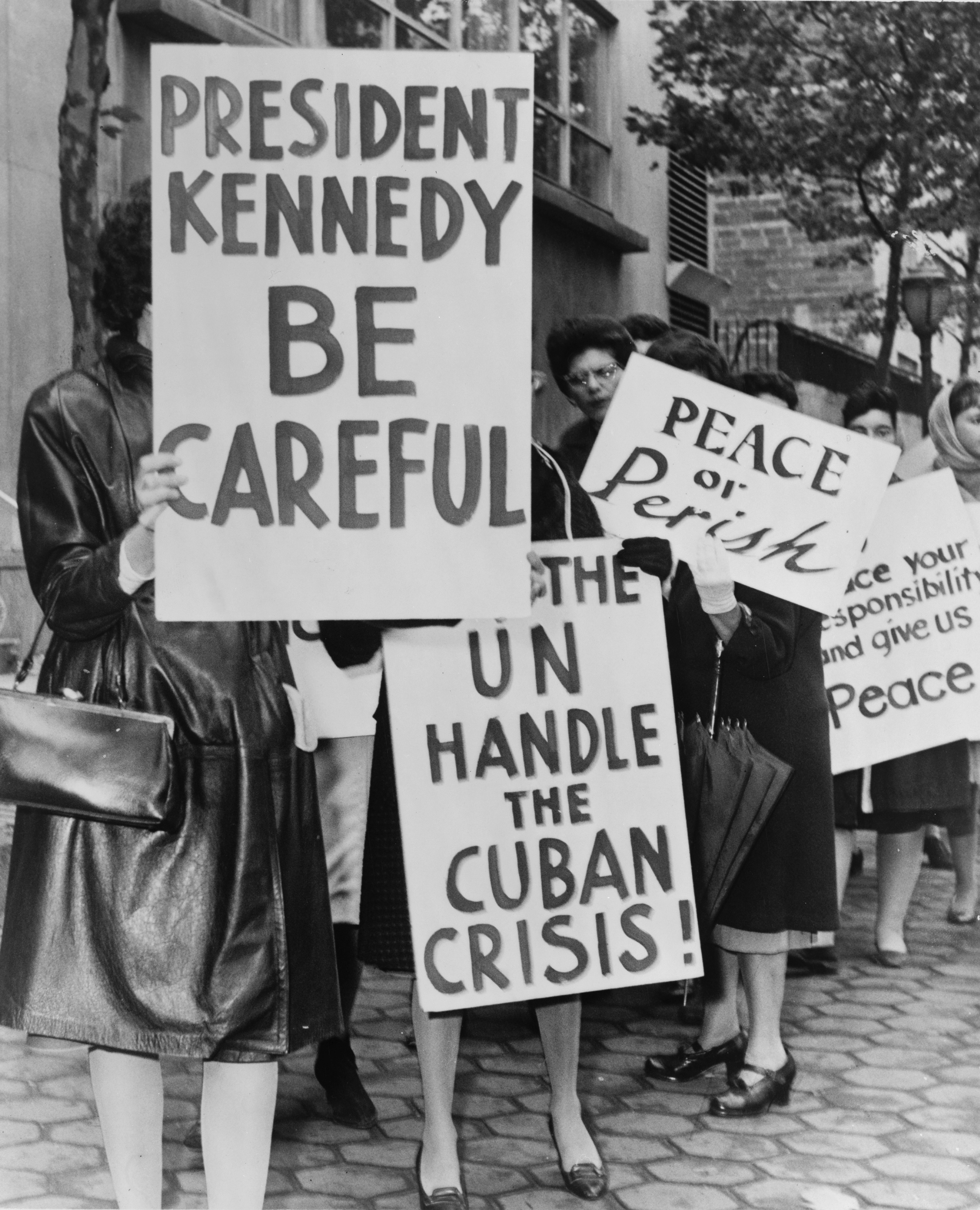
Thoughts on the Cuban Missile Crisis

By John Stratton

“Who do we want to be with when we die?” That was the question. Should we be with each other or with our families? I was a senior in high school during the Cuban missile crisis, and that was the question we asked each other as we heard about the Soviet missiles in Cuba and about “our” response.

I don’t remember being shocked that we were asking that question. We were accustomed to the idea of “mutually assured destruction.” We all knew that if someone — i.e., the Soviets or us — launched a nuclear missile, the other side would launch its missiles. Mutually assured destruction — and I don’t know of anyone who commented, then, on the acronym. It was the official policy of the nuclear age, the way to keep us safe — Mutually Assured Destruction, MAD. It was madness we had come to accept, and that acceptance was another kind of madness.

One of the unexpected joys about sitting in a doctor’s waiting room is finding old magazines, sometimes with really interesting articles. That’s how I found “John F. Kennedy's Vision of Peace” by Robert Kennedy, Jr, in Rolling Stone.

Tuesday, December 30, 2014

One Hundred Years Ago — Christmas Truce

By John Stratton

What if they gave a war and nobody came?

This was a favorite slogan during Vietnam protests. The idea is wonderful. “They” have declared war, as “they” do for whatever reasons “they” declare war, but this time no one comes to the party. No soldiers, no war. It made a kind of cosmic comic sense; it still does.

The amazing thing is that it once happened: Christmas Eve, 1914.

When I first heard the story, I assumed it was apocryphal, a wish that people had for peace in the carnage of World War I.
The Christmas Truce 

For a generation, World War I was known simply as the Great War. Before that it had been known by different hard-to-resist propaganda slogans: the War to End All Wars and the War to Save the World for Democracy. Like most wars it was a failure: probably 7 million combat deaths, another 3 million military deaths from disease, accidents, malnourishment and maltreatment in POW camps; perhaps 6 to 10 million civilian deaths, perhaps more. Twenty million deaths in a war that was the prelude to another World War in 25 years, when two or three times as many would be killed. Twenty million deaths in a world with a total population of less than 2,000 million (2 billion). Perhaps one or one-and-a-half percent of the world killed. Shall we note there were probably 20 million non-lethal casualties of one sort or another.

But the Christmas Truce was not apocryphal. It was real, a spontaneous gesture reaching across no-man’s land on Christmas eve, 1914.

The War had begun just months before. The assassination of the Archduke Ferdinand of Austria and his wife in Sarejevo occurred at the end of June, and that set in motion the dominos of mutual defense alliances. Of course it could have been stopped, but no one was willing to stop it. Young men rallied to the cause — whichever cause they rallied to — as a way to test their manhood. The recruiters, including the press for both sides, said it would be over by Christmas, but it was just beginning.

Wednesday, December 17, 2014

Human Up!


By Peter Slade

In the aftermath of the US Senate Select Committee on Intelligence (SSCI) report on the CIA’s detention and interrogation program that revealed, among other things, that two psychologists were paid $81 million to design and participate in the CIA’s so-called “enhanced interrogation” techniques, Fox news got an exclusive interview with Dr. James Mitchell - one of the psychologists that Physicians for Human Rights is calling a war criminal.

I watched the interview online and found the experience equal parts disturbing and morally disorienting.

Dr. James Mitchell presents himself as a reluctant torturer. A man compelled to abandon his “moral high ground” by the events of 9/11 to save American lives. That the interrogation techniques were in fact torture (whatever legal definitions the CIA hides behind) is clear from the interview. Dr. Mitchell told Megyn Kelly that “the techniques are so harsh that it’s emotionally distressing to those who are administering them.” One can only imagine how distressing they are for the subject of those techniques.

Thursday, November 20, 2014

Videos from "Shall We Drone On?"

Have drones become the weapons of our age? These "unmanned aerial vehicles," sometimes used to assassinate human targets in remote areas, raise a host of constitutional, legal, moral and strategic questions. Here is a two part presentation from earlier this month that was sponsored by ACN and given by two faculty members from Ashland University. Dr. Craig Hovey is executive director of Ashland Center for Nonviolence and associate professor of religion and Dr. Michael Schwarz is assistant professor of history.


Thursday, November 13, 2014

Why Aren’t You Listening? The Role of Hip Hop in Social Justice Movements

https://dubplate.fm/sites/default/files/hip-hop.jpg
By Sharleen Mondal

Music—both when it is heard and performed—has long been recognized for its power to inspire. Across cultures and time periods, music has played a key role in social movements, including, for instance, protest songs composed to signify a united commitment to a common cause of justice for all. The song “We Shall Overcome,” an anthem of the Civil Rights Movement, has been translated into countless languages and continues to enjoy enormous cross-cultural appeal. On my first trip to Bangladesh in the late 1980s, I forged bonds with people I was meeting for the first time in part through a shared appreciation for the artists of the time—Roxette, Michael Jackson—but also “Amra Korbo Joy,” the Bengali version of “We Shall Overcome.” Despite the geographical gap between us, that song united us with a common understanding of what it meant to breathe sounds and words into a melodic, shared expression of the struggle for something better. Decades later, I was struck by Bollywood melodrama’s refashioning of “We Shall Overcome” in My Name is Khan (2013), wherein through that song, a Muslim South Asian immigrant to the United States who experiences horrendous Islamophobia forms a deep connection with a small church community in Georgia devastated by Hurricane Katrina. In real life and in fiction, the power of one song to mobilize and connect people for peace is evident.

And yet, some genres of music are less frequently associated with healing and connection. The recent so-called “loud music trial,” for instance, involved Michael Dunn shooting Jordan Davis, an unarmed black teenager, at a gas station in Jacksonville, Florida, triggered by Dunn’s disgust at the music Davis was playing in his vehicle—what Dunn reportedly called “thug music.” Dunn’s phrase betrays a fundamental disconnect between a widespread view of rap and hip hop as violent and culturally inferior, and a long history of the genre which has historically grappled, with brutal honesty, with issues such as class struggle, racism, police brutality, poverty, and the prison industrial complex. And while hip hop cannot be excluded from the wide-ranging cultural forms in our society that are tainted with homophobia, sexism, and other forms of violence, changes within the genre, mainly amongst progressive underground artists, have taken the genre to a new level.

This past Saturday, as I attended a performance in Cleveland featuring Brother Ali, I was struck by the discrepancy between a popular perception of hip hop which pervades particular communities, which discount the entire genre from having anything meaningful to offer, and the power of progressive hip hop to inspire and motivate social justice, a power widely recognized as a matter of course within other communities (mainly social justice community organizers comprised primarily of immigrants, people of color, and working-class people). The messages conveyed through song and speech throughout this particular show that I attended would not have surprised anyone familiar with this strain of the genre: a frank, unapologetic calling out of homophobia and sexism. The dire need for working-class people to organize and address—through creative and community solutions—economic and structural oppression. The injustices being committed globally in the name of wars on terror that are terrorizing countless innocent people. The lessons of previous social justice workers and the need to know their legacy, to converse with one’s community, to struggle together to understand acts of violence that strike one’s community, and to act in unity against injustice.

As we consider the role of cultural work, such as art, literature, and music, in shaping both our understanding of and participation in movements to forge peace and justice in our communities, it is important to ask along the way what narratives we are not listening to, and for what reason. If hip hop can help mobilize one of the most important movements in our cultural moment against police violence in Ferguson, articulate the pain and courage of Arabs and those living under a violent and long-standing occupation, and even help with depression and mental illness, perhaps the question for peace and social justice workers who have long dismissed the genre might be this: why aren’t you listening?


Sharleen Mondal is Assistant Professor of English at Ashland University, where she teaches Victorian and postcolonial literature and gender and women’s studies. She has also served as a trained advocate, translator, and volunteer for Chaya, an anti-domestic violence organization serving South Asian communities in the Seattle area. She has served on the ACN Steering Committee and is currently beginning volunteer work with ASHA Ray of Hope, based in Columbus, OH, and the Akron Area Interfaith Council.

Sunday, October 12, 2014

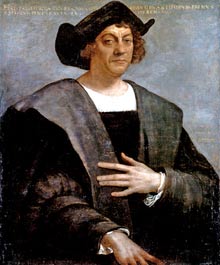
Repentance, All the Way Down: A Columbus Day Meditation

By Myles Werntz


One of the questions which a day like Columbus Day presents is not whether or not Columbus should be celebrated, but what should be done instead of celebration. Columbus’ diaries and the historical record speak abundantly to the reasons for not celebrating Columbus, but should we perhaps celebrate another exemplar? Should we, as Seattle has recently done, reform the day into Indigenous People’s Day?  Or should there be perhaps another exemplar celebrated, such as Bartolome de las Casas?

In looking at this day from the perspective of nonviolence, there seems to be no easy answer, and certainly no perfect exemplar. Columbus, as the historical record attests, engaged in slavery, forced labor, and dismemberment of the indigenous people. The indigenous people were no pacifists, engaging in skirmishes with their neighbors. De las Casas, while famously advocating against the Spanish enslavement of the indigenous people, initially proposed that the Spanish enslave Africans instead of the North American natives. Any alternate celebration, while moving away from Columbus, only appears to celebrate violence again in a different form. 

Wednesday, October 8, 2014

Domestic Violence Awareness Month: What Can We Do?

by Sharleen Mondal
courtesy of the Florida Times Union website jacksonville.com

October is Domestic Violence Awareness Month and this year, it arrives on the heels of the highly publicized case of former Baltimore Ravens’ running back Ray Rice, who was indefinitely suspended from the NFL after video exposed his physically violent attack against Janay Palmer in an elevator (see a timeline of the events of the case here). With regard to the NFL, the conversation about domestic violence and the league’s poor handling of the Rice case continues. The Seattle Seahawks’ quarterback Russell Wilson, for instance, has penned a call to recognize the need for NFL players to handle aggression productively, and for fans to donate to the National Domestic Violence Hotline. Meanwhile, cultural workers like comedian Megan MacKay have produced work not only to entertain, but also to provoke audiences to discuss recurring narratives of survivor-blaming and lack of adequate accountability for abusers.In the midst of the broader public controversy, it might be easy to lose sight of two critical questions: how does domestic violence affect me? What can I do about it?

Wednesday, October 1, 2014

Redtail Run Brings Nations Together

By Emily Wirtz

If you asked for my opinion, I’d have to tell you that I would prefer to walk a mile on hot Legos before I’d ever choose to run a marathon. But others aren’t so wary of long distances. In 1992, massive groups of indigenous and Native Americans began to run.

Elder men of a native community carry prayer staffs.
In Native American culture, an Eagle represents the spirit of the northern continents, while a condor represents the south. The year of 1990 began talk of an ancient tradition of bringing the eagle and the condor together to celebrate resources and community. Two short years later, the Peace and Dignity Journey began for these people. Natives from the northernmost tip of Alaska to the southern islands of Chile began their spiritual journeys towards Central America, bearing prayer staffs of every community. Vanessa Inaru Pastrano, a native Taino woman and the director for the Taino community’s Journey, explained that it was a culmination of prophecy: that “native nations will come together again.”

Thursday, September 18, 2014

World Day of Prayer for Peace

Picture from PAX CHRISTI USA WEBSITE

September 21, 2014

SEVERAL YEARS AGO, the World Council of Churches and then the United Nations eventually designated September 21st every year as the DAY OF PRAYER FOR PEACE around the world.Since then many religious groups have also given support. It’s now a world-wide observance in a variety of ways. May the following thoughts enrich your involvement in “praying for peace” regularly.

For Peace
Eternal God, in whose perfect kingdom no sword is drawn but the sword of righteousness, no strength known but the strength of love: So mightily spread abroad your Spirit, that all peoples may be gathered under the banner of the Prince of Peace, as children of one Father; to whom be dominion and glory, now and for ever. Amen.

For our Enemies
O God, the Father of all, whose Son commanded us to love our enemies: Lead them and us from prejudice to truth: deliver them and us from hatred, cruelty, and revenge; and in your good time enable us all to stand reconciled before you, through Jesus Christ our Lord. Amen.

[From the Book of Common Prayer]

Tuesday, August 26, 2014

Policing as Counterinsurgency

By John Moser
A few weeks back my wife and I visited the charming little college town of Delaware, Ohio. Delaware is about 35 miles from Columbus, and is home to Ohio Wesleyan University, as well as a collection of fine restaurants and even a microbrewery. We had chosen a good night to go, because there was a local street fair, and the town was alive with booths from local businesses and civic organizations. The Delaware police were there, too.

And they brought with them their new toy, a big black armored vehicle called an MRAP. That stands for mine-resistant, ambush-protected.

One might wonder why Delaware, with fewer than 36,000 residents, has need of such a vehicle. Is the local constabulary really that worried about mines or ambushes?

But of course this development is hardly unique to Delaware. For the last ten years the Department of Defense has been providing local police forces across the country with military hardware at cut rate prices. Delaware paid only $2,600 for its MRAP, which ordinarily sells for some $700,000.


Friday, August 22, 2014

What Sort of People Will We Be? A Reflection on Ferguson and Christian Identity

By Brian Bantum

As a teacher and especially as a theologian I try to help students connect how a community's understanding of who God is connects to the way they see themselves and their world. But inevitably, when we encounter the historical atrocities of the American slave system, Jim Crow, or other global acts of tragic dehumanization and violence, students are overwhelmed. But they also express a curious distance from those historical perpetrators. They say something like this, "Well, surely something like that couldn't happen now, we are not those sort of people." 

But what "sort of people" either justify or ignore the persistent cries of those being dispossessed and persecuted? And herein lies the fundamental problem. The implicit language of what is natural underlines how we view ourselves and others. While a relatively small percentage of individuals owned slaves in the United States, the assumption of what black bodies were, by nature, and what white bodies were, by nature, served to perpetuate the system as part of God's natural order.

Thursday, August 21, 2014

The Colors of My School

By Sue Dickson

Daviny sat next to me in the school’s cafeteria, her head bent closely to the paper as she bit her bottom lip in concentration. We were in La Aguada, a rural school in the FARC controlled mountains of northwest Colombia. She was showing me that she could write the letters of her name. Her parents do not read or write—but she does. Daviny is nine. She wants to be a teacher. She walks a couple of kilometers on mountain trails to school every day. Violence is part of Daviny’s life. Her older brothers have been recruited by the FARC. When a group of FARC militants showed up at the door of the family’s hut, they knew: they could either join the guerillas or be killed. As Daviny and I worked, one of the brothers was watching us from the edge of the jungle. In another world, at another time, he would have been a student in the school, too. He is fourteen. Now, he was a militant watching from the margins.

The school is three concrete-block rooms, painted bright yellow with blue trim—the colors of Colombia. Large windows look across a grassy field and out over the valley and jungle-wrapped mountains. There are no other buildings in sight. These mountains are exquisitely beautiful and they are exquisitely dangerous for outsiders. They are remote, undeveloped, sparsely inhabited and therefore a perfect hideout for the FARC. In the valley to the north, the paramilitaries remain in control. In the middle of that valley, a military base stands watch. Violence is commonplace.

Monday, August 4, 2014

Peace and Preservation


By Emily Wirtz

Just to piggy-back off of some of the other environmentally-based posts on here, I figure it’s worth discussing why we seem to think “the Earth is just a dead thing you can claim” (of course it was necessary to use a Pocahontas reference). We infect our own environment with pesticides, noxious gases, and waste and then take the good stuff from it—deforestation, city expansion, war destruction—and still expect the world to be a-okay.

[This is no joke. Residents of Toledo are presently warned not to drink the water since it comes out of the water source looking like the image to the left. The cause is an algae bloom in Lake Erie from phosphorus used in farming fertilizers. —Ed.]  

Vanessa Inaru Pastrano, “Inaru,” is a dedicated member of the United Confederation of Taino People, an elder of the Bohio Atabei Council and coordinator of the Peace and Dignity Journey’s Caribbean region. As an indigenous Native American, this Taino woman feels a strong connection to our environment: “Those trees, that grass, those insects all have a language of their own, and just because it’s not English or Spanish doesn’t mean we should ignore it.”

Inaru returned to Ohio to partake in Youngstown’s Taino Summer Solstice ceremony on June 21st, during which I had the opportunity to listen to her talk about her community involvement and environmental passions. Companies like Monsanto that advertise as “sustainable agriculture” yet use harmful pesticides and GMOs in their crop production, she explains, are a big part, but only one part, of the disintegration of Earth’s health.  Sure, “the Earth is going through its natural processes,” she continued, “but we are escalating it.” Waste from ships, deforestation in the Amazon and bombing in the Middle East are a few other issues she feels are “destroying the lungs of the Earth.” We seem to think, she explains, that nothing’s wrong unless we can see it directly affecting us. We ignore the destruction of the Earth because media doesn’t cover it. “We have to think like an Indian. Everything has life and purpose and meaning. Everything on this planet is alive, and the Earth is dying, and we are destroying it.”
 

Thursday, July 24, 2014

The Violence We Want to Hear About

By Craig Hovey

It’s one thing to charge American media sources for being biased in favor of either Israelis or Palestinians (here is one example). But some commentators (like here and here) have been trying to make sense of the fact that Israel-Palestine gets more airtime than other conflicts, that the violence currently in Gaza is prompting much greater American media response, public protest, and analysis than violence in Syria, Ukraine, and northern Iraq. 

One commentator highlights the phenomenon by pointing to the fact that, last weekend, there was a higher death toll in Syria than total casualties so far in Gaza. He also cites a reporter for the Pakistani newspaper Al-Hayat who tweeted about anti-Israel protests in Pakistan but no anti-Syria protests even though Syria has 320 times the death-toll. 


This report (and this analysis) likewise show the relative lack of concern for Syria compared to Gaza, so much so that a Youtube video of Syrian children being used as human shields was largely ignored until it was re-posted with the false claim that it shows Hamas and children in Gaza.


There just seems to be something about the Israel-Palestine situation that consistently registers much more highly for the average American than other current conflicts. A former student of mine remarked that in his town people are wearing pro-Israel or pro-Palestine t-shirts like they are sports fans. 


Contrast this with the situation in northern Iraq. There are stories reporting ISIS’s order of female genital mutilation for the women of Mosel and the rape and murder of Iraqi Christians in Mosel while “the West is silent.” Why the silence?


I worry that no explanation is very flattering. Perhaps Americans are so fed up with Iraq that we simply don’t want to hear about it any more. It could also be that the idea of a persecuted Christian minority is embarrassing for some western believers for whom Christianity is a conquering force, or else is incongruous for western secularists for essentially the same reason, together with the assumption that these conflicts are only about politics and not about religion. 


Still more reasons must include the closer connection many Americans feel with Israel due to the large proportion of Israel that claims European or American ancestry. There is also a cultural connection in which western political and moral ideas such as democracy and how to wage war justly may be thought more plausibly to be expected of Israel compared to Arab nations. These last two points might help explain both opposition to Israeli policies and the prominent place that the Gaza situation has on the radar. We don’t have anti-Syria protests like we do anti-Israel protests because, according to the Al-Hayat reporter, the “only reason I can think of is Muslim killing Muslim or Arab killing Arab seems more acceptable than Israel killing Arabs.” 


It’s of course hard to know how to account for it all, but it strikes me that there is more going on than merely a need for journalistic balance or “equal time.” We actually seem to want to hear about some things and not others. 


Friday, July 18, 2014

The Toughest Job You’ll Ever Love

By Emily Wirtz

During my short month in Costa Rica—and it was much too short—I had the most incredible experiences, made some crazy friends and met some of the most amazing people. Ultimately, one of my goals while in this beautiful country was to learn more about the peace-keeping environment for which they are known. I had the opportunity to meet and talk with David Kaufman, “Don David,” the director and founder of the Conversa program and Peace Corps member.

After receiving a Spanish degree from Ithica College, Kaufman became a dedicated member of and language instructor in the Peace Corps in the Dominican Republic. Then going on to serve as the Spanish Language Coordinator in Puerto Rico, he was inspired to create the programs in Conversa based upon the same values.

Of his time in the Corps, Kaufman was more than eager to discuss. A lot of people are reluctant to join due to an environment foreign and possibly dangerous. “You’ll get frustrated, you’ll get sick,” he
explained, “but they take care of you.” The opportunities within the Corps as Kaufman describes them are endless and open to a variety of experience and skill levels. If a program doesn’t work, it gets adjusted. “The toughest job you’ll ever love” was a life changing experience for this American tico.

Wednesday, July 9, 2014

Conserva, Conserva - Student Report from Costa Rica

by Josie Schave

“So, in the United States, is it common for people to leave the lights on all the time?”

I blushed as I realized that I had left my room light on, and rose from the couch to go correct the situation.
“No, no, it’s fine—“

“No, no, I—“ My sentence was cut off as I tripped over one of Kevin’s toys. Blushing furiously now, I went to my room and shut off the stupid light. My host dad, Mauricio Cordero, was still sitting in the armchair, laughing at my goofiness. Oh yeah; I guess I should mention that all of this took place in Spanish.

From May 17th through June 14th, I had the immense pleasure of taking part in the AU in Costa Rica program in order to have an authentic immersion experience and obtain credits toward my Spanish major. During this time I stayed with Mauricio Cordero and Laura Calvo Alfaro, and their children Allison (age eight) and Kevin (age four). During my all-too-brief stay in Costa Rica, I realized that Costa Ricans have a true passion for protecting the environment— a passion that I could use some work on. Since the school I was attending was clearly a friend of the environment (one of their logos reads, “Conversa, Conserva”, or “converse, conserve), I decided it would be a logical place to start.

I decided to interview Sergio Álvarez, one of my teachers from Conversa, on the subject of conservation. I had noticed his passion for the environment during my second week at Conversa when he showed all of the students around campus and taught them all about the different trees and plants. The following interview was conducted primarily in Spanish (and secondarily in my third language: Spanglish).

My first question related to the history of conservation in Costa Rica: “Has Costa Rica always been friendly to the environment?” According to Sergio, it hasn’t. Between the 1940s and 1970s, Costa Rica had experienced 70% deforestation. In response to this, reforestation efforts started in the mid-1970s. Since then, 50% of the deforestation has been recovered, and 25% of Costa Rica is part of the system of National Parks and Reserves. Sergio remarked that part of the reforestation efforts had to do with improving tourism.

Friday, July 4, 2014

Hobby Lobby: Private and Public is the Real Issue

By Craig Hovey

The real issue with this week’s Supreme Court Hobby Lobby decision isn’t primarily religion; it is what counts as private and public. Religion is a factor, but only secondarily: religion is private (so is sex); state interests are public. The interesting development that has everyone talking—though it is an extension of the Court’s logic in the Citizens United case of 2010—is that corporations are now not only “persons” with rights, but the freedoms of corporations now include religious liberties on matters of individual conscience. (Some people, playfully, detect a sick irony in the idea that “corporations have a conscience.”) 

But I think all of this is secondary to the real issue of public v. private. 

The pro-choice Roe v. Wade (1973) decision famously asserted or upheld the right to privacy for individuals and backed away from personhood arguments for fetuses. I believe we are now witnessing the pro-life side using both the personhood and privacy arguments in their favor. If a fetus can’t be a person, how about a corporation? If pregnancy is a private matter in which the state has a very limited role, why shouldn’t the “personal conscience” of corporations be safeguarded from the state (in this case, from the mandates of Obamacare)? Some might cynically conclude that all of this rights-talk gets hauled out by either side only whenever it suits them and that this ad hoc deployment of such powerful legal arguments fails to account for how they can be turned around to argue the opposite. (The philosopher Alasdair MacIntyre predicted this in his 1981 book After Virtue—“rights” are floating free from more substantive moral traditions). Let’s test this. 

Suppose I have religious objections to war. As a matter of conscience, then, I might also object to whatever portion of my tax dollars that goes to support the Pentagon. Should I be

Monday, June 30, 2014

Two Presidents and the Quest of a Warless World

by Craig Hovey

This may seem like a non-sequitur, but today I’m thinking about two presidents: the president of the United States and a past president of Ashland University. Bear with me.

President Obama won’t have the United States fund just any old Syrian rebels with $500 million. We’ll only fund ones who have been “Appropriately Vetted.” I wonder what this vetting process involves given the administration’s stated goal of protecting Syrians against both the regime and extremists. We’ve also learned about the president’s announcement, in a speech at West Point, of plans to create a $5 billion counterterrorism fund to be used in the Middle East—$4 billion of which will go to the Pentagon. Meanwhile, the National Security Council maintains that “there is no military solution to this crisis [in Syria].” And of course 300 American military advisors are right now on their way to Baghdad. 


I’m struck by how readily military means are edged up to problems that admittedly have no military solution. If we zoom out, I think it’s clear that there was no military solution to the problem of Saddam Hussein over a decade ago, or at least it’s clear that Iraq’s current problems are partly the result of how a military “solution” failed to bring peace. War and peace are strategic issues and we discuss how effectively or ineffectively peace may be achieved through violence. 


Now, because Ashland University gets a new president this week, I’m also thinking about what a past president, J. Allen Miller (1866-1935; Ashland College president 1899-1906), thought about war. He wasn’t interested in the strategic questions, but in moral, spiritual questions and matters of conscience. Here’s a quote from a sermon he preached called “The Quest of a Warless World”:

“WE ARE CONSCIENTIOUS NON-RESISTANTS. This is the Historic position of the Church. We insist that MORAL and SPIRITUAL issues can not be arbitrated by FORCE. War is basically a moral issue. An appeal to ARMS is an appeal to brute force. Force can never make a wrong and an injustice, right and just, whether as between man and man or Nation and Nation. We refuse to be partners to the settlement of a moral issue on the basis that might makes right.

Thursday, June 19, 2014

How to avoid the same old mistakes in Iraq


As events in Iraq continue to intensify, the United States government is trying to determine the best way to respond in light of all of the lives and money that have already been sacrificed in trying to create a democratic government in that country.  In the U.S. News and World Report article shared here, Michael Shank and Yemi Melka of the Friends Committee on National Legislation address reasons why the U.S. should not use military force in this conflict.

Forget military strikes. The U.S. should address sectarian tension by promoting regional cooperation.
By Michael Shank and Yemi Melka
Published June 18, 2014
 http://www.usnews.com/opinion/blogs/world-report/2014/06/18/how-obama-can-avoid-old-mistakes-against-isil-in-iraq


As fighters from the Islamic State in Iraq and the Levant, known as ISIL or ISIS, and bands of insurgent groups seize new cities and head south toward Baghdad, Iraq’s escalating humanitarian and security crisis necessitates a radical rethink in how the West handles this threat. If America wants to help the hundreds of thousands of Iraqi families impacted by this violence, it must be willing and ready countenance a completely different foreign policy path forward.
Washington’s current proposal for a military strike will only increase the volatility of the situation and imperil the population on the ground even more. In the nearly 10 years of the most recent American warfare in Iraq, the strong military arm of the Defense Department failed to guarantee stability and security in the country. More of the same approach, then, will similarly fall short.
What must be considered, instead, is first an understanding of how the West failed Iraq and, secondly, how it can help remedy these failures. To be clear, this current uprising resulted, in part, from devastating sanctions followed by years of bombing and the U.S. invasion and occupation of Iraq. Whether it was the overlooked importance of political reconciliation, the lack of sustainability and accountability in Iraq’s security force training or missteps in recruiting regional cooperation, Iraq will continue to witness instability unless these points are addressed promptly.  Read more here...


Michael Shank    Michael Shank, Ph.D., is associate director for legislative affairs at the Friends Committee
                        on National Legislation.

Yemi Melka Yemi Melka is a legislative intern with the Friends Committee on National Legislation.