Wednesday, August 19, 2026

Programming 2026-2027


Saturday, October 10, 2026

Bridging Divides:  What To Do When People Disagree

Conflict Resolution Training

Heritage Room, Upper Convo 

9:00 - 4:00


This workshop will help participants develop practical strategies for de-escalating conflict and building solutions that last. There will be a focus on managing high emotions and keeping conversations productive. Led by Dr. Jennifer C. Batton, who has 30 years of experience in the field.


Tuesday, October 13, 2026


Playing for Change 

Open Mic Night

Eagles' Landing

6:30 - 8:30


Join us for an open mic night at the Eagles Landing featuring songs and poems of peace. Write an original work or perform an existing piece. Enjoy a night of community and connection.  Contact jshaw4@ashland.edu for musical direction


Tuesday, October 20, 2026


Annual Meeting

Conflict Resolution Training

ABCD Conference Rooms

5:00


Come and hear an update on the work of the Ashland Center for Nonviolence.  It's a potluck, so bring a dish to share!


Wednesday, November 4, 2026


Military Uses of Artificial Intelligence

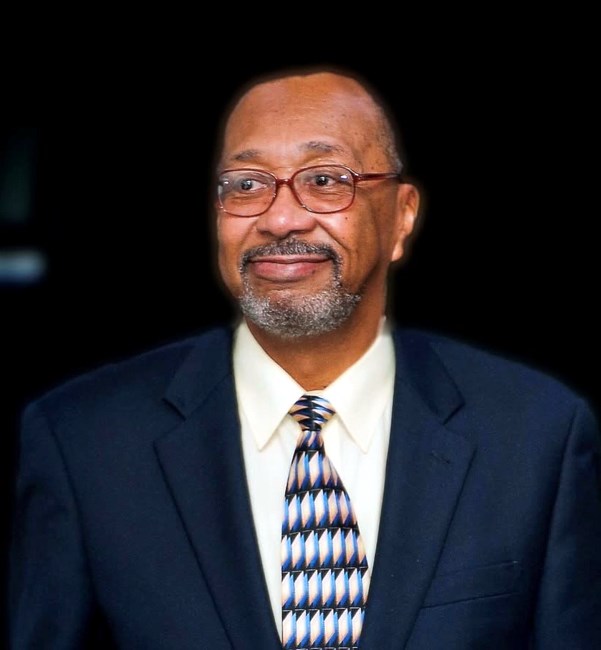
Dr. Branka Marijan

Alumni Room, Upper Convo

7:00


Dr. Branka Marijan, a Senior Researcher at Project Ploughshares in Toronto, Canada, studies the military and security implications of emerging technologies. Her work examines concerns regarding the development of autonomous weapons systems and the impact of artificial intelligence and robotics on security provision and trends in warfare.


Wednesday, January 20, 2027


Martin Luther King Reading & Discussion

Center for CommUNITY and Belonging

12:00

Celebrate the week of Martin Luther King, Jr. Day by gathering and discussing an important reading by King.  Refreshments provided.


Friday, February 19, 2027


Ohio Peace and Conflict Studies Network Conference

AU Campus

9:00 - 4:00


The Ohio Peace and Conflict Studies Network (OPCS) conference brings together faculty, students and nonprofit organizations from across the state to explore how civic engagement can serve as a powerful form of peace-building to create and strengthen democratic practices.


Saturday, February 20, 2027


War & Peace:  The 12th Annual John D. Stratton Conference

AU Campus

9:00 - 4:00


ACN’s annual conference features scholars and practitioners working in a variety of fields. This year's focus on War and Peace highlights enduring and urgent matters relating to the nature of war, the conditions that produce it, the experience of it, and the many forms of peacebuilding that respond to it. Our Keynote Speaker is Dr. Tanya Maus, the director of the Peace Resource Center at Wilmington College. Lunch is provided.


Wednesday, March 3, 2027


Homicide, Government Legitimacy & Solidarity

Dr. Randolph Roth

Dauch 115

7:00


Dr. Randolph Roth, a Distinguished Professor at Ohio State University, applies insight from social science and American history to explain fluctuations in US Homicide rates.  He looks at shifts in Americans' beliefs in the legitimacy of government and the character of leadership, feelings of affinity for or alienation from fellow citizens, and acceptance or resentment of the social hierarchy.  


Tuesday, April 6, 2027


The Third Harmony:  Nonviolence and the New Story of Human Nature

Film & Discussion

Student Center Auditorium

7:00


Join us for a showing of the film, The Third Harmony:  Nonviolence and the New Story of Human Nature.  This film tells the story of nonviolence to help us better grasp just what nonviolence is and how it works.  The film points out what each of us can do to facilitate the fulfillment of Mahatma Gandhi's promise that nonviolence could, "oversweep the world" and allow us to find personal fulfillment in the process.  


Saturday, February 14, 2026

The Spirit of Peace Conference Schedule (subject to change)


Conference Schedule (subject to change)

Location: All sessions will be held in the Ashland University Dauch College of Business

Friday, March 20, 7pm

Inter-Religious Dialogue Panel  

Room 115    

  • Semiha Topal, Program Manager for the Tuohy Center for Interreligious Understanding at John Carroll University
  • Ellen Posman, Chair of the Department of Religion, Baldwin Wallace University
  • Bill Warters, Michigan Alternatives to Violence Project; Wayne State University (retired)
  • Craig Hovey (moderator), Professor of Religion, Ashland University


Saturday, March 21

8:00am – Registration opens, Coffee & light breakfast

8:45am – Welcome remarks (room 115)

9:00am  10:30am: Session 1

 A (Room 104)                                                                                                          

Bill Warters

Michigan Alternatives to Violence Project;
Wayne State University (retired)

“20th Century Roots and Branches of Nonviolence Theory”

Semiha Topal

John Carroll University

“Bridgebuilding and Religious Pluralism: Fostering Interreligious Understanding in a Divided World”

B (Room 105)                                                                                                                                 

Brian Collins

Ohio University

“Hindu and Buddhist Attitudes toward Sacrificial Violence”

Derek Kubilus

First United Methodist Church

“Garden Variety Politics: The Subversive Witness of the Old Testament”


10:45am – 12:15pm: Session 2 

A (Room 104)                                                                                                                                                                                                                                                                                                                 

John Crowley-Buck

John Carroll University

“Spiritual Resilience for Nonviolence Civil Resistance: An Ignatian Approach”

Connie Kassor

Cuyahoga Community College

“The Sharp Edge of Compassion: Buddhist Perspectives on Anger and Peace”

B (Room 105)                                                                                                            

Kailey Bradley

Marian University

“Holding Loss, Cultivating Peace: Spiritual Support as a Foundation for Community Healing”

Danielle Ravitzki

Independent Scholar

“Family, Forgiveness, and Justice:  Challenging the Moral Obligation to Forgive in Families”


12:15pm – 1:15pm: Lunch, Room 115

1:30pm – 2:30pm: Panel Discussion, Room 115

Ohio Council of Churches P.L.A.N. (Pastors & Laity Advancing Nonviolence)

Featuring Tom Carlisi (P.L.A.N. Training Team Leader, OCC) and Amariah McIntosh (Associate Director & Director of Public Policy, OCC)


3:00pm – 4:30pm: Session 3

A (Room 104)                                                                                                                                     

Ohio Council of Churches P.L.A.N. (Pastors & Laity Advancing Nonviolence)

“Experiential practice and developing an Action Plan for Outreach and Implementation of OCC P.L.A.N. in participants’ communities”

Jayne Wilcox

Ashland Theological Seminary

“Shalom-Making: The Primary Vocation of the Church”

B (Room 105)                                                                                                             

Elaine Stratton Hild


Corpus monodicum, Uni Würzburg

“Peace at the End: Deathbed Practices in Historic Europe”

Katherine Brown


Ashland University

“The Spiritual Foundation and Legacy of Lorenzetti’s Allegories of Good and Bad Government Fresco Cycle in Siena, 1338”


Tuesday, February 10, 2026

Remembering Dr. Robert Suggs

The founding members of the Ashland Center for Nonviolence note with sadness the passing of former AU provost Dr. Robert Suggs. He was provost in the early years of the 21st century. He was soft-spoken, but forthright. He was guided by deep spirituality.


Dr. Suggs supported the local weekly vigil protesting the US government’s threat to invade Iraq in the winter of 2002-03. He sometimes joined the vigil that convened every Monday at the corner of Claremont and College Avenues and King Road. He also provided funds so that eloquent voices for peace—guest speakers of the caliber of Arun Gandhi, Yolanda King, and Jim Wallis—could be invited to campus in the years immediately after the invasion of Iraq and the war that followed. Those speakers drew large audiences that encouraged the former vigil participants, led by Dr. John Stratton, to establish a permanent organization that became the Ashland Center for Nonviolence.

Dr. Suggs retired to Florida with his wife Mary, where they were active in the Faith Covenant Church of Saint Petersburg. He is survived by his wife, four children, and their families. The Ashland Center for Nonviolence acknowledges the generous moral and material support provided by Dr. Suggs in its earliest formation.


Monday, October 20, 2025

Israeli-Palestinian Grassroots Peace Initiative Comes to Ashland

Roots Tour: Two Truths in One Heart, Two Peoples in One Land

Wednesday, November 5th | 7pm

John C. Meyers Convocation Center - Trustees Room

Join us to hear about the challenging and groundbreaking work of this Israeli-Palestinian grassroots initiative for understanding, nonviolence and transformation in the West Bank.

Check out https://www.friendsofroots.net/ for more information.

Co-Sponsored by the Ashland University Honors Program.

Wednesday, October 1, 2025

Judge Not

A group of us here in Ashland are getting excited about our upcoming training in Nonviolent Communication this weekend. In preparation, we’re reading a book by the same title by Marshall Rosenberg, who developed this methodology in the 1960s and 1970s. 


Nonviolent Communication teaches us to be observant, to see and withhold judgment. This is the first step in NVC, but it’s crucial, especially when it comes to communication that in some way hopes to bring resolution with another person: to mitigate a conflict, to deescalate a situation, to alter some destructive or distressing behavior. Rosenberg emphasized that many conflicts escalate because people confuse observation with evaluation (judgment). When we mix in judgments, interpretations, or labels, the other person often feels criticized and becomes defensive. 

Friday, September 26, 2025

Call for Papers - "The Spirit of Peace" Conference 2026


Multi-disciplinary Conference to be held March 21, 2026
Ashland University in Ashland, Ohio

Call for Papers: Due December 20, 2025

In order to foster interdisciplinary conversations around peace and nonviolence, the Ashland Center for Nonviolence invites proposals for the 2026 John D. Stratton Conference, centered on the theme: “The Spirit of Peace.”

This conference will explore how spiritual, religious, and contemplative traditions understand, articulate, and display peace commitments. While many contributions to peacemaking arise from political, legal, and scientific efforts, enduring global movements have often drawn their deepest strength from spiritual sources: practices of prayer and meditation, prophetic traditions, rituals of healing and forgiveness, and visions of interconnectedness and beloved community.

We welcome proposals from across disciplines—including religious studies, theology, ethics, history, literature, philosophy, psychology, education, the arts, and peace studies—as well as from practitioners working in interfaith dialogue, religious education, activism, and other peace-related fields. Together, we seek to better understand the spiritual dimensions of peace and how they can be nurtured in today’s world.

Question to explore might include:
  • How do spiritual and religious traditions define and pursue peace?
  • What roles do inner transformation, mysticism, and contemplative practice play in peacemaking?
  • How have faith-based movements contributed to nonviolent resistance or reconciliation?
  • What are ethical, theological, and other related roots of nonviolence across religious traditions?
  • How do religious and spiritual art, music, and ritual help to cultivate a culture of peace?
  • How can and have spiritualities been linked to resilience and hope amid violence and injustice?
  • How can spiritual formation be integrated into peace education?
Both theoretical and practical approaches are encouraged.

Submission Guidelines:

Abstracts of no more than 300 words should be submitted using the online submission form no later than December 20, 2025. Individual presentations should plan for 35 minutes with 10 additional minutes for discussion. Panel proposals are also encouraged.

Presenters are welcome to engage in academic or practical debates but should avoid unnecessary jargon and be mindful that our audience includes scholars, students, community members, and practitioners from a wide range of disciplines and backgrounds.


For more information on the Ashland Center for Nonviolence or for questions related to the conference, please contact acn@ashland.edu or (419) 289-5313.


Monday, September 22, 2025

Compassion and Humanity, Even in Battle

by Craig Hovey

This last Spring, I learned about a fascinating and surprising event that took place during a WWII battle 80 years earlier. In response to a suicide attack on the USS Missouri, the ship’s captain led a military burial for the pilot with full honors. It was the same kind of burial that any of the ship’s own crew would have received. None of the crew of the Missouri were killed in the attack.

See AP story here

The 80th anniversary of this event was marked by a ceremony aboard the Missouri, which is now a museum at Pearl Harbor. It was reported that the ceremony included grandsons of the captain, the mayor of Honolulu, and a Japanese city where kamikaze pilots often flew from. 

Monday, September 15, 2025

Stop it!

It may be that our historical moment is not unique, but it can feel like it is. There are enough tensions, outright violence, and injustices that must end to make one throw up one’s hands and shout “stop it!” 

Getting other people to stop what they’re doing, especially when it’s violent, degrading, or unjust, makes sense. In trying to accomplish this, we may get close to nonviolence, but we’re not there yet. 

Tuesday, January 21, 2025

Gaza Ceasefire is an Opportunity

Thank God for the recent ceasefire in Gaza. It's almost impossible to imagine a way forward toward lasting peace in the region, between Israelis and Palestinians. This is one of the world's most difficult and painful conflicts and obviously requires a lot of careful work. Deep and compassionate listening will be crucial, as it always is when seeking reconciliation and peace, no matter the scale—from interpersonal conflict to conflicts between nations and other groups. It is a simple and profound truth, here articulated by Thich Nhat Hanh and Oprah Winfrey several years ago:

Friday, January 17, 2025

Love: The Center of Nonviolence

Martin Luther King, Jr. was deeply influenced by Jesus and Gandhi, both of whom taught the importance of love. “At the center of nonviolence stands the principle of love,” King said to the War Resisters League in 1959. It is not enough to resist using physical violence; we must avoid the internal violence of our spirits. The following year, King confessed that he had been tempted to consider that loving one’s enemies really is something we should only apply at the individual, person-to-person level while a “more realistic approach” is the right path when addressing bigger things: social problems or conflicts between nations. But Gandhi’s teaching of satyagraha—truth-force—changed his mind. When we commit to always seeking the good of others, recognize the humanity of our adversaries, and trust love as a creative and redemptive force, we are holding on to and expressing deep truths. 

There are deep divisions in our nation and our world, some of which will likely be on display today if we look around. We should remember that the way of peace is a love that allows no room for physical violence, for sure, but also allows no room for the internal violence of our spirits, hearts at war with others. How can I recognize and value the humanity of my adversary? Are they speaking something I should listen to and learn from? How can I be open to hearing it? It can be hard to ask these questions and even harder to answer them with our lives. It is much more normal to shut out my adversaries, to hate them, to ridicule them in my heart or to my friends, to draw attention to their failures, and then, if possible, to try to get them to change their ways by some coercion. This is normal but very unfortunate because this means that I still have a heart at war and a violent spirit. It does not align with the truth of nonviolence founded on love. King taught a better way.

Friday, January 3, 2025

In Memoriam: Jimmy Carter

The life of James Earl Carter, Jr., the 39th President of the United States of America (1977-81), provided me an up-close introduction to politics at an impressionable age. In 1976, I was a second grader living in middle Georgia, a few hours’ drive from Carter’s rural hometown of Plains. My brother and I accompanied my parents and their friends as they campaigned for him on days’ long car drives around south Georgia. We waved green-and-white posters at intersections, attended speeches and parades, wore “Jimmy Carter for President” T-shirts and pins (I saved the one in the photo), and visited small businesses to deliver brochures. Because Carter had served prior as a State Senator from Georgia (1963-67) and Governor of Georgia (1971-75), his hallmark smile and dialect were familiar to me. From my perspective, at the time of his Presidential run, Jimmy Carter was not a new public figure. But he represented for me novel directions for public life and offered a fresh point of reference for what a committed political life could achieve.

An exemplar of servant leadership, Carter exhibited a commitment to peace during and long after his time in the Oval Office. As President, perhaps his most notable achievement was his mediation of the Arab-Israeli conflict. He invited Anwar El-Sadat, President of Egypt, to meet with the Israeli Prime Minister, Menachem Begin, at Camp David in 1978 with an aspiration of reaching a peace agreement. Although the talks did not yield a withdrawal of Israeli settlements from the West Bank, Egypt did formally recognize Israel, and elected governments were established in the West Bank and Gaza. The Camp David Accords were instrumental in closing a longstanding conflict between Israel and Egypt and marked the first treaty between Israel and any Arab country. Carter had said that one of the greatest goals of his life was to bring peace to Israel, and expounded on this idea in his 2006 New York Times Bestseller, Peace Not Apartheid.

His post-Presidency years are often lauded for his volunteerism, both close to home and abroad. He helped build houses with Habitat for Humanity, a non-profit organization founded in Americus, Georgia, that aims to help low-income families build and own safe, decent, and affordable housing. Carter had been instrumental in early promotion of the organization and volunteered construction time well into his eighties. In Atlanta in 1982, he founded The Carter Center with the purpose of advancing human rights, alleviating human suffering, and improving the quality of life for people in 80 countries. He observed and monitored 113 elections in Africa, Asia, and Latin America through The Carter Center’s Democracy Program and fought disease through the Center’s River Blindness Elimination Program (cartercenter.org).

Source: Habitat.org

Throughout my adulthood, I have visited Carter’s Boyhood Farm in Plains, Georgia multiple times and attended numerous “Conversations at The Carter Center” in Atlanta. I heard Rosalynn Carter speak passionately about mental health issues at a Rotary Club meeting in Macon in the 1990s. The most memorable occasion was hearing Jimmy Carter teach an adult Sunday School class at Maranatha Baptist Church in Plains in the early 2000s. Sitting in the first few pews of a modest church, listening to him expound upon the story of Daniel in the Lion’s Den, and then meeting him in the churchyard afterwards, will remain with me as a salient, enduring memory.

The life of Jimmy Carter (1924-2024) impacted millions of people, improving health and housing for vulnerable populations worldwide. His commitment to peace through diplomacy and conflict resolution remains central to his legacy. His efforts to find peaceful solutions to international discord, as well as advancing democracy and human rights, were acknowledged by a Nobel Peace Prize in 2002. His humility and spirituality that served as a foundation to his political views affected me profoundly as a young person and have served as a role model to me well into adulthood. May he rest in peace.

—Dr. Katie Brown, Dean, College of Arts & Sciences, Ashland University

Tuesday, December 17, 2024

Let It Begin With Me

The song “Let there Be Peace on Earth and Let it Begin with Me” was written by Sy Miller and Jill Jackson in 1955 and is often associated with the Christmas season. The angel and the heavenly host proclaimed peace on earth to shepherds in the region of Bethlehem. The Miller and Jackson interpretation not only encourages self-examination and self-criticism, but also empowers each of us to be a part of the peace that is coming. Like Gandhi’s “Be the change you want to see,” we are taken from the thought of the overwhelming character of violence and conflict in our world and given a task: start with ourselves.

In one of the most influential recent books on conflict resolution, The Anatomy of Peace by The Arbinger Institute, the authors begin by observing a common assumption when facing conflict, whether within families, at work, or at the geopolitical scale. It is usually assumed that others must change. The authors think this is a mistake that results in conflicts continuing as root causes go unaddressed or even are perpetuated in attempts to solve the very problems that they are causing.

If the root causes of all conflict—including the ones that we feel most powerless to address—are the same, overcoming them can certainly begin with me. The authors of The Anatomy of Peace identify bitterness, envy, indifference, and resentment, although the list can be expanded to include greed, fear, the need to control, and so on. Their point is that conflict cannot just be identified by actions since conflict refuses a heart at peace and nurtures a heart at war. Identifying these things gets us thinking about root causes. Wars can be hot or cold, violent or not violent. But a war that is cold and not outwardly violent is still a war. A heart at war refuses to believe the humanity of other people and sees them as objects and obstacles. A heart at peace emphasizes our shared humanity, looks for ways to cooperate, and commits to finding shared solutions to problems.

Nonviolence is about so much more than not being violent. It is about cultivating a heart at peace, open to discovering forms of violence within ourselves that we did not know to call violence; welcoming truth from strangers, including enemies; and looking for what is good and beautiful in ourselves and around us. The Arbinger Institute and countless others who put in the hard work to resolve (or reframe) conflicts will point to this work as usually being arduous and drawn out, especially since hearts at war can be resistant to embracing an alternative. But there’s no shortcut around dealing with the root causes, which is why peace on earth begins with each of us.

Tuesday, May 14, 2024

Means are Everything

In 1924, Gandhi responded to the claim that any means are okay as long as the goal is a good one. He disagreed. "I would say," he wrote, "'means are after all everything'. As the means, so the end. Violent means will give violent Swaraj [ self-rule] ... There is no wall of separation between means and ends . . . I have been endeavoring to keep the country to means that are purely peaceful and legitimate. . . . If we take care of the means, we are bound to reach the end sooner or later."

Gandhi's commitment to uniting means and ends contrasts strongly with so much of what we witness. Today, for example, in Israel's war with Hamas in Gaza, more than 35,000 Palestinians have been killed, ceasefire negotiations have stalled, and other nations are turning their backs on Israel while Israel's leaders express their willingness to stand alone.

Sixty years ago in his Nobel Prize acceptance speech, King said, "I believe that unarmed truth and unconditional love will have the final word in reality." To him, the reason for this appears to have been that unarmed truth and unconditional love are actually the nature of reality itself. In the same speech, King urged that humanity must "evolve for all human conflict a method which rejects revenge, aggression and retaliation. The foundation of such a method is love."

Likewise, Gandhi taught that "nonviolence is the law of our species." It is the power that believes that the best way to a just and peaceful future is to act justly and peaceably all the time. But it's more than this since nonviolence isn't just a belief about something essential to our humanity; it is the truth about our humanity.

I was recently speaking with an Israeli who commented that Israel has already lost its war with Gaza. He might not have phrased his point in terms of nonviolence. But the idea is there: "Violent means will give violent self-rule."

I often point out that, at ACN, we don't spell "nonviolence" with a hyphen. This came to us as a suggestion from Arun Gandhi when ACN was being founded 20 years ago. It's got to be nonviolence rather than non-violence. Otherwise it's a problematic word because it can imply that violence comes first, that violence is the more fundamental reality of things, and then some of us feebly come along try to oppose it.

But it is nonviolence that comes first just as peace is a deeper reality than violence. We must not let violence set our agenda. Many of us have made this point countless times. But it's always a challenge to accept and believe since there is clearly so much to oppose. How does one hold onto and convey the conviction that peace is a deeper, more fundamental reality than violence?

I think about Keon, a student leader here who started Ashland's Black Lives Matter protests in 2020. He would sometimes shout at passing drivers, "We love you no matter what!" It occurred to me that this, more than anything else, was what made our demonstrations on Ashland Main Street peaceful. It's not so much that we kept from using violence. That's not the heart of nonviolence. It's as King said: "The foundation of such a method is love."

I must not shame or humiliate my adversary. I need to work to identify shared problems and figure out what shared solutions might be. This work is itself already peace-work and it's easily swept aside when we're self-confident, self-assured, self-righteous. What if my adversary is actually part of my truth-finding process? What if she is speaking something that I need to hear? How will I make sure that I'm open to hearing it?

There is, as Gandhi taught, an experimental quality to all of this: experimental and risky. Satyagraha, we remember, literally means "truth-force" and Gandhi would talk about his own experiments with truth. All of this is an experiment with truth—the truth that love is the foundation of all things. It would be very foolish to try to live as though that were true if it isn’t. But this is why nonviolence must be dared. 

Craig Hovey

Executive Director, ACN

Friday, October 20, 2023

Statement on the Ongoing Violence in Israel and Palestine

At the Ashland Center for Nonviolence, we mourn the violence in Southern Israel and Gaza. Our hearts break over the loss of life, safety, and livelihood in Israeli and Palestinian communities. As conditions appear to worsen and tensions increase, a humanitarian crisis is unfolding.

We stand by the principles of nonviolence now more than ever. Violence should never be confused with justice nor can it achieve true and lasting peace. The dignity of every person is precious and must be upheld by policies and processes of community-building. Every individual has inherent worth regardless of their background, beliefs, or circumstances, emphasizing the need to treat all people with respect and fairness.

At ACN, we are committed to increasing understanding, especially when situations are complicated. This understanding takes patience, humility, and education. We also recommit ourselves to being guided by core principles of peace and justice. These look for shared solutions to problems for building a better future and are not content with only ending conflict—although this is of course no small goal, especially at the moment. Instead, as Martin Luther King, Jr. taught, creating a future situation in which violence isn't needed to protect and avenge can be achieved by meeting human needs and delivering justice evenly. Love names the preference for mutual benefit over retaliation and hostility.

There are no easy solutions to most conflicts, not least the conflicts between Israel and Palestine. The present escalation calls to mind the depth of the historical wounds involved, generations of persecution, pogroms, and displacement; decades of incomplete and sadly inadequate attempts at peacemaking, and ultimately the need for our world to devote sustained energies and resources to preventing the kinds of horrors we are seeing and to ensuring peaceful and just coexistence.

Peace,

Craig Hovey
Executive Director
Ashland Center for Nonviolence

Friday, February 24, 2023

Jennifer McBride Delivers the 2023 Rinehart Lecture in Practical Theology

Jennifer McBride, an author, educator and theologian, delivered the 2023 Rinehart Lecture in Practical Theology at Ashland University on Wednesday, February 22, at 7 p.m. Her presentation, which was free and open to the public, focused on the findings of her book, You Shall Not Condemn: A Story of Faith and Advocacy on Death Row. The event was held in room 115 of the Dauch College of Business and Economics (400 College Ave.). 

The Rinehart Lecture in Practical Theology is an annual endowed public lecture honoring the memory and continuing work of Don Rinehart, who inspired generations of AU students as a faculty member for 46 years. For more information on the Rinehart Lecture series, contact Peter Slade, Chair of the religion department and professor of religion at Ashland University, at (419) 289-5237 or at pslade@ashland.edu. 

Click HERE to listen to the audio from the Lecture, and HERE to purchase McBride's book. 


Friday, November 18, 2022

ACN Attends PJSA Annual Conference


From October 14th through October 16th, the Ashland Center for Nonviolence (ACN) participated in the annual conference of the Peace and Justice Studies Association (PJSA) at the University of Mount Union. Elizabeth Buttil, the Assistant Director of the ACN program, and three Peace Scholars, Josie Brown, Tyler Easton, and Carolina Amparo, spent two days learning about Peace movements, theories, and leaders.
    
The PJSA conference was organized into a series of activities such as roundtable discussions, lectures, film screenings, and poetry readings. On the first day, our ACN team joined a roundtable led by attendees from Berea College about  “Teaching and Learning Nonviolence through Being Nonviolent.” Afterward, we listened to a presentation by one of the members of the ACN programming committee, Dr. Wim Laven, titled “What are They Telling Us?” Dr. Laven’s work was focused on “ the role of forgiveness in healing a divided America” according to a “broad range of responses from students and young adults.” Friday ended with a keynote lecture by E. Ethelbert Miller, who spoke on “Writing Poetry and Asking Questions: The Journey of an African American writer.”


Our ACN team presented the following Saturday morning. We spoke about “Peace Scholars as Models for Peacebuilding on College Campuses” and explained the initiatives ACN has held in the past few years, such as book clubs, tutoring programs for local students, peace vigils, and forums. We took a variety of questions from audience members who were affiliated with similar organizations across the country. Overall, the ACN panel highlighted the interests and strengths of our Peace Scholars and displayed the different ways we can promote a welcoming and respectful campus community.


    After our panel discussion, we split up for the remaining two sessions and listened to different topics. Some learned about peace and justice issues pertaining to the “Colonial, Postcolonial, and Decolonial” moderated by Dr. Michelle Collins-Sibley, who is another member of our programming committee. Others focused on topics such as “Exploring Gender, Sex, and Sexuality.” After eating some phenomenal Thai food for lunch, we made our way back to the awards banquet and plenary speech.


 The PJSA conference was an opportunity for educational and personal growth. As Peace Scholars, we were able to practice presenting our work before an audience and, as participants, were free to explore the aspects of Peace Studies that called to us. We are incredibly grateful to our Assistant Director, Elizabeth Buttil, and all other members and donors of ACN who made this experience possible. 


Carolina
Amparo an undergraduate student majoring in Political Science and Political Economy at Ashland University. She is a Peace Scholar with the Ashland Center for Nonviolence, as well as an Ashbrook Scholar and a Diversity Scholar.